
How to Launch a Clothing Collection Like a Pro (Pre-Launch to Sell-Out Strategy)
Learn how to build a waitlist before sales, create hype around your collection launch, and use proven pre-launch strategies to sell out your new product launch.
A collection launch should feel like an event.
Not a random post.
The difference between a $2,000 launch and a $50,000 launch?
Preparation!!
Why Most Collection Launches Fail
Brands usually:
Announce the launch too late
Don’t build anticipation
Sell to cold audiences
Don’t use email marketing
Forget urgency
A successful collection launch starts 30 days before it goes live.
Step 1: Build a Waitlist Before Sales
This is the most powerful strategy.
Instead of:
“New collection drops Friday.”
Try:
“Join the VIP list for 24-hour early access.”
Benefits:
Higher conversion
Warm audience
Predictable revenue
Your blog How to Create More Sales for Your Clothing Brand pairs perfectly with this strategy.
Step 2: Create Hype Around Your New Launch
Use:
Collection launch teaser posts
Behind-the-scenes videos
Fabric sourcing stories
Moodboards
Sneak peeks
Styling previews
Show the journey.
Build emotional investment.
Step 3: Use Pre-Launch Content Strategy
3–4 weeks before launch:
Week 1: Tease concept
Week 2: Reveal inspiration
Week 3: Show pieces
Week 4: Open waitlist
You can map this inside:
The 2026 Fashion Marketing Calendar
Planning content reduces stress and increases results.
Step 4: Launch Like a Pro
Launch Day Checklist:
Email goes out first
VIP list gets early access
SMS reminder
Instagram stories live
Website banner updated
Clear urgency messaging
Don’t discount immediately.
Lead with value.
Step 5: Extend Revenue After Launch
Most brands stop marketing after launch day.
Instead:
Highlight best sellers
Share customer photos
Show “Almost sold out”
Run restock alerts
Send abandoned cart reminders
Launch week should feel dynamic.
Advanced Strategy: Limited Drops and Scarcity
Instead of permanent inventory:
Use:
Capsule collections
Seasonal drops
Limited stock
Pre-orders
Scarcity increases perceived luxury.
If you want to strengthen positioning before launching, revisit:
Marketing Tactics Every Fashion Brand Should Steal
Strong brand positioning makes launches easier.
Tools You Need for a Smooth Launch
Use automation for:
Email sequences
SMS reminders
Countdown timers
Inventory tracking
If you need recommendations:
See The 7 Best Tools to Run a Fashion Brand
Systems scale revenue.
Final Thoughts
A successful collection launch is not about hype alone.
It’s about:
Strategy.
Timing.
Structure.
Scarcity.
Storytelling.
When you combine these elements, your collection launch becomes predictable revenue, not guesswork.
How to Increase Sales for Your Clothing Brand (Without Breaking the Bank)
Struggling to sell your clothing line? Discover proven tactics to increase online sales, improve your clothing brand, and create more profit without breaking the bank.
If you’re struggling to sell your clothing line, you’re not alone.
Most fashion founders don’t have a product problem.
They have a positioning, pricing, and launch strategy problem.
If your goal is to create more sales, increase profit, and grow your clothing brand sustainably — this guide will walk you through proven tactics that actually work.
Why Most Clothing Brands Struggle to Increase Sales
Before fixing your sales, you need to understand why they’re low.
Most brands:
Post consistently but don’t convert
Get traffic but few purchases
Rely on discounts to make sales
Launch without strategy
The issue isn’t effort.
It’s structure.
Sales grow when you combine:
Strong brand strategy
Clear messaging
Smart pricing
Strategic marketing
A conversion-focused funnel
If you haven’t clarified your brand identity yet, read Marketing Tactics Every Fashion Brand Should Steal and How to Market Your Clothing Brand Online to fix your positioning foundation.
Build a Sales Funnel for Your Clothing Brand
If you want to increase online sales, you need a funnel — not random posts.
Stage 1: Attract With Value-Based Content
Use:
Pinterest SEO
Fashion blog content
Reels
Educational posts
Style guides
Attraction content builds authority and trust.
Your blog post How to Market Your Clothing Brand Online is a perfect top-of-funnel entry point.
Stage 2: Capture Leads Before Selling
Instead of sending cold traffic directly to product pages, build:
VIP early access lists
Email newsletters
Free styling guides
Launch waitlists
Email marketing consistently outperforms social media in conversion rates.
If you don’t have systems in place, check The 7 Best Tools to Run a Fashion Brand to set up automation.
Stage 3: Convert With Strategy
Now we sell.
Use:
Scarcity messaging
Limited quantities
Countdown timers
Social proof
Testimonials
“Only X left” indicators
This is how brands grow without increasing ad spend.
Retail Hacks to Increase Sales Fast
If you want immediate improvements, start here.
1. Improve Your Product Pages
Your product page should answer:
Who is this for?
When would they wear it?
How will they feel?
Emotional selling converts better than technical descriptions.
2. Raise Prices Strategically
Low prices can damage perceived value.
Premium positioning attracts better buyers and higher lifetime value customers.
If you’re unsure about pricing psychology, read: Pricing Strategies for Clothing Brands
Better pricing = better margins = better growth.
Also, download my Pricing Alignment Guide for free here
3. Bundle and Upsell
Increase average order value by offering:
Styling bundles
Capsule wardrobe kits
“Complete the look” suggestions
Accessories add-ons
This increases profit without increasing traffic.
Improve Your Website Conversion Rate
Most brands don’t need more traffic.
They need better conversion.
Optimize:
Clear homepage messaging
Strong hero statement
High-quality imagery
Lifestyle photography
Fast loading time
Mobile-first design
Small improvements create exponential revenue growth.
Long-Term Strategies to Grow Your Clothing Brand
Quick wins help.
But sustainable growth comes from:
Strategic product launches
Consistent content marketing
Seasonal marketing planning
Influencer partnerships
SEO blog traffic
Strong brand storytelling
If you want to plan your entire year strategically, use:
The 2026 Fashion Marketing Calendar
Planning removes chaos and increases profit predictability.
Final Thoughts
To increase sales for your clothing brand:
Stop focusing only on posting.
Start focusing on structure.
Sales grow when:
Your brand is clear.
Your pricing reflects value.
Your marketing attracts the right audience.
Your launches create urgency.
That’s how 7-figure brands operate.
The 2026 Fashion Marketing Calendar
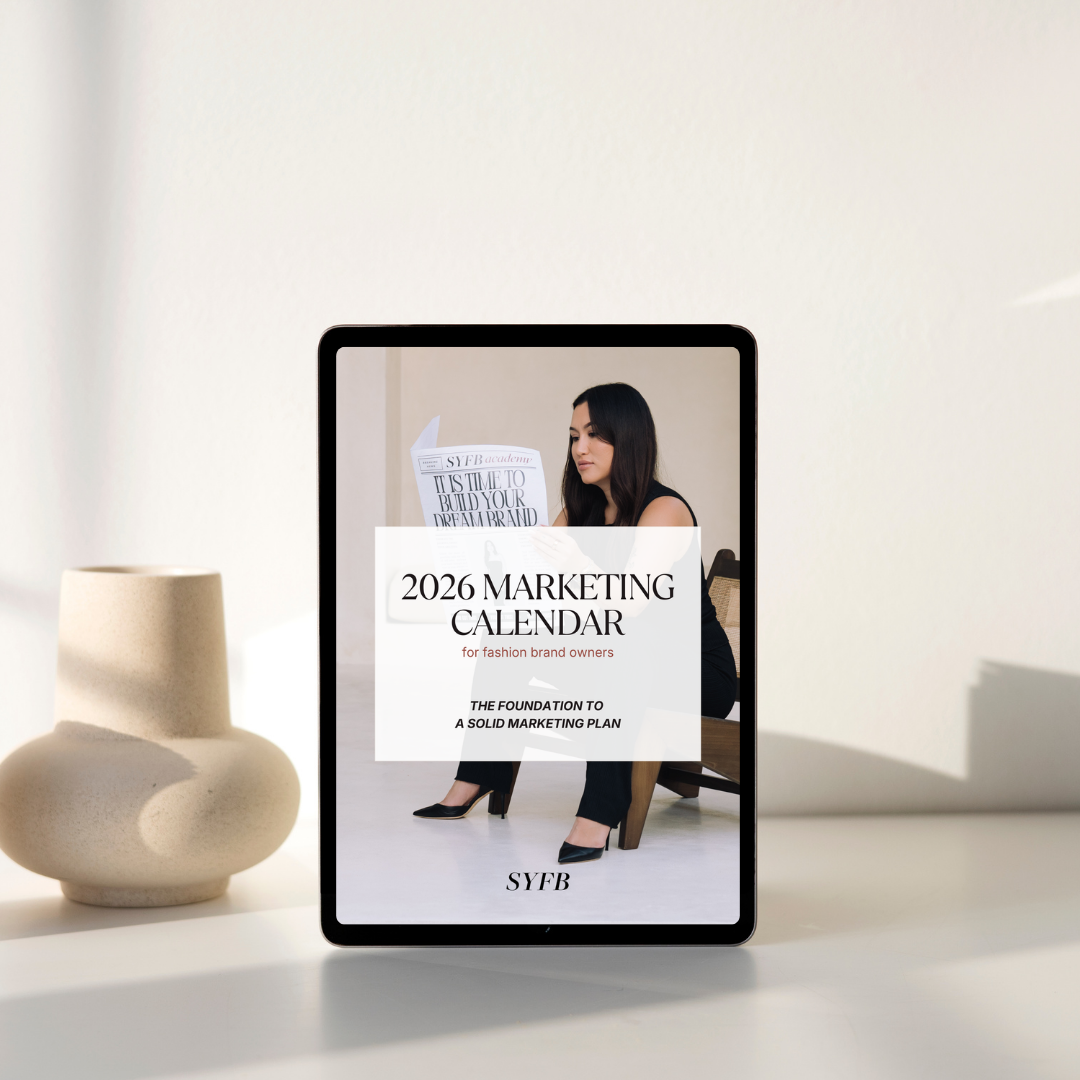
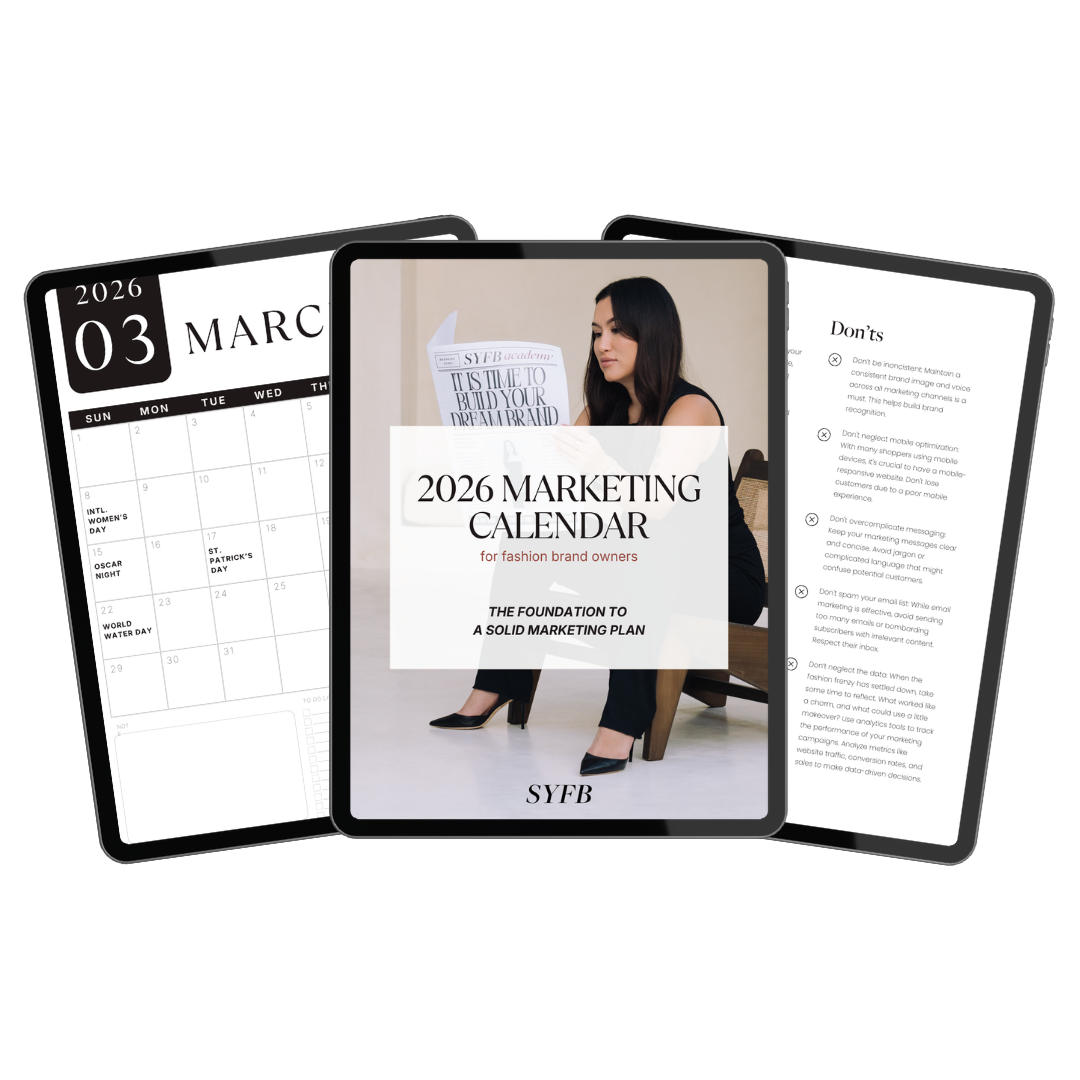
The 2026 Fashion Marketing Calendar is a strategic planning tool for fashion brands who want clarity, consistency, and long term relevance without reacting to trends or algorithms.
A strategic season by season planning tool for fashion brands who want clarity, consistency, and long term recall in 2026
Why the 2026 Fashion Marketing Calendar Exists
Most fashion brands do not fail because they lack creativity.
They fail because they are reacting.
Reacting to algorithms.
Reacting to competitors.
Reacting to whatever feels urgent that week.
Reaction creates noise.
Noise erodes clarity.
The strongest fashion brands do not plan louder.
They plan earlier.
The 2026 fashion marketing calendar was created to help fashion brand owners step out of reactive decision making and into intentional identity led planning.
Planning ahead is not about control.
It is about alignment.
What the 2026 Fashion Marketing Calendar Helps You Do
This is not a list of content ideas.
It is a strategic framework designed to help fashion brands see the full year before it starts demanding attention.
With the 2026 fashion marketing calendar, you can:
Map fashion marketing campaigns without chasing trends
Align product launches with brand memory instead of noise
Build consistency across seasons without creative burnout
Plan around moments that matter rather than moments that shout
Protect your brand voice as your business scales
Clarity creates restraint.
Restraint signals authority.
Who the 2026 Fashion Marketing Calendar Is For
This calendar is designed for:
Fashion brand owners and founders
Creative directors and brand leads
Marketing teams tired of building for the algorithm
Fashion brands thinking beyond the next drop
If your goal is short term virality, this calendar is not for you.
If your goal is long term relevance, you are in the right place.
Why the 2026 Fashion Marketing Calendar Works
People do not trust brands that constantly change their voice.
They trust brands that know who they are.
This calendar is not about doing more marketing.
It is about doing the right things repeatedly so your fashion brand compounds instead of resetting every season.
Consistency builds recall.
Recall builds preference.
Preference builds growth.
Download the 2026 Fashion Marketing Calendar
If you want to enter 2026 with a marketing plan that feels grounded, clear, and intentional:
Download the 2026 Fashion Marketing Calendar
Free download.
Immediate access.
A Final Note
This calendar will not tell you what to say.
It will help you remember who you are before the year tries to decide for you.
Get the 2026 Fashion Marketing Calendar below
The 7 Best Tools to Run a Fashion Brand
Discover the 7 essential tools fashion brand founders use to stay organized, scale smarter, and reduce overwhelm. A stage-based breakdown of Notion, Shopify, Canva Pro, wholesale platforms, and marketing tools — plus how to use them without overcomplicating your business.
Running a fashion brand today isn’t just about creativity. It’s about systems.
Most founders don’t struggle because they lack ideas. They struggle because they’re juggling too many tools, too many tabs, and too many decisions with no clear structure.
After 15 years of building my own 7-fig fashion brand and helping fashion founders at different stages (from first launch to scaling wholesale), these are the 7 tools I consistently recommend to simplify operations, increase sales, and reduce overwhelm.
This isn’t a “must-have tech stack.”
It’s a stage-based toolkit you can grow into.
How to Use This List (Important)
You do not need all seven tools at once (you can if you want!!)
Each tool below includes:
what it’s best for
who it’s designed for
when to use it
mistakes to avoid
how to start without overcomplicating things
Use this guide to make clear decisions, not rushed ones.
1. Notion: Best Tool for Fashion Brand Organization
Purpose: Fashion brand planning, workflows, and systems
Notion acts as the central hub for your entire fashion business. It replaces and lists scattered Google Docs, notes apps, and mental to-do lists with one organized dashboard.
I use Notion to manage brand strategy, launches, content calendars, SOPs, and long-term planning and it’s often the first tool that helps founders feel in control again.
Best for:
Solo founders running multiple roles
Fashion brands preparing to scale
Founders who feel disorganized or mentally cluttered
Common mistake:
Turning Notion into a complex system instead of a decision-making tool.
How to start:
Create one master dashboard for priorities, launches, and notes.
2. Canva Pro: Best Design Tool for Fashion Brands
Purpose: Creating professional fashion visuals without a designer
Canva Pro allows fashion founders to create consistent, on-brand visuals quickly, from Instagram content to lookbooks, line sheets, pitch decks, and email graphics.
This tool is especially powerful in the early stages when budgets are limited but presentation still matters.
Best for:
Early-stage fashion brands
Founders managing content in-house
Brands building visual consistency
Common mistake:
Using too many fonts, colors, and templates.
How to start:
Upload your brand colors and fonts, then reuse them across all assets.
3. Shopify: Best E-Commerce Platform for Fashion Brands
Purpose: Selling fashion products online and scaling sustainably
Shopify remains one of the most reliable and scalable platforms for fashion e-commerce. It supports everything from first product launches to international expansion.
If you’re serious about building a long-term fashion business, Shopify provides the infrastructure you need.
Best for:
Direct-to-consumer fashion brands
Founders planning long-term growth
Brands that want flexibility and scalability
Common mistake:
Overdesigning instead of focusing on conversion and usability.
How to start:
Choose a clean theme, prioritize product photography, and simplify checkout.
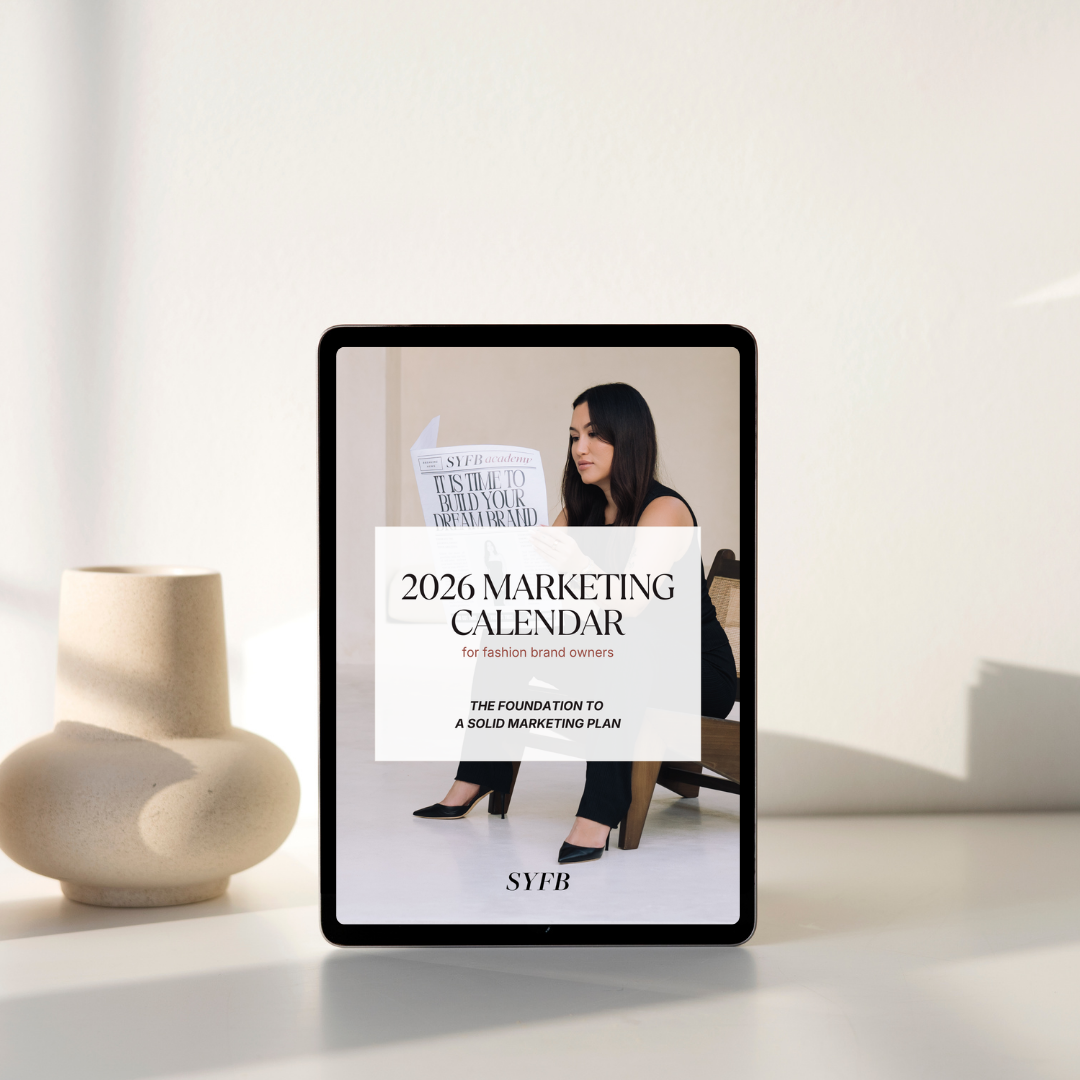
Talking about e-commerce, I have a free 2026 Marketing Calendar with important e-comm dates so your marketing plan this year can align! Click here to download your free copy.
4. Faire: Best Wholesale Marketplace for Fashion Brands
Purpose: Finding wholesale buyers without cold outreach
Faire connects fashion brands with global retailers, allowing buyers to discover your products organically.
It’s often the easiest entry point into wholesale — if your brand is properly positioned.
Best for:
Fashion brands entering wholesale
Designers seeking retail exposure
Founders avoiding cold pitching
Common mistake:
Joining wholesale platforms before pricing and margins are ready.
How to start:
Optimize your product photos, pricing, and brand story before applying.
5. Brandboom: Best Wholesale Management Tool
Purpose: Managing wholesale orders, line sheets, and buyers
Brandboom becomes essential once wholesale is no longer “experimental” and starts driving real revenue.
It allows you to manage line sheets, buyers, and orders professionally: saving time and reducing errors.
Best for:
Brands with active wholesale accounts
Founders managing multiple buyers
Growing fashion teams
Common mistake:
Using Brandboom before wholesale volume justifies it.
How to start:
Upload one clean line sheet and onboard existing buyers first.
Faire vs Brandboom: Which One Do You Need?
These tools are not competitors.
Faire helps you find buyers
Brandboom helps you manage buyers
Many successful fashion brands use both at different stages.
6. Wise: Best Payment Tool for International Fashion Brands
Purpose: International payments and currency exchange
Wise is one of the most practical tools for fashion brands working with overseas manufacturers, suppliers, or buyers.
It significantly reduces fees compared to traditional banks.
Best for:
Brands working with international suppliers
Global fashion businesses
Founders scaling internationally
Common mistake:
Losing money to bank exchange fees unnecessarily.
How to start:
Open a multi-currency business account and separate brand finances.
7. Omnisend: Best Email & SMS Marketing Tool for Fashion Brands
Purpose: Automated email and SMS marketing that converts
Omnisend is one of the highest-ROI tools on this list. When set up properly, it generates consistent revenue without constant launches or social posting.
Best for:
E-commerce fashion brands
Founders wanting predictable sales
Brands moving beyond social-only marketing
Common mistake:
Sending emails without segmentation or strategy.
How to start:
Set up:
welcome flow
abandoned cart flow
post-purchase flow
Btw, I share my 15 years of fashion expertise with my Insider List through fashion business tips, insights, and the latest solutions. Click here to receive them in your inbox too!
Affiliate Transparency
Some links in this post are affiliate links. I share these tools because they’re the same ones I use and recommend to my clients and students.
Final Takeaway
The most successful fashion brands don’t use more tools. They use the right ones at the right time.
Systems create freedom.
Clarity creates momentum.
And simplicity scales better than complexity.
If you want support choosing the right tools for your stage or building systems that actually work, this is something I guide founders through inside my programs.
You don’t need everything.
You need what works for your brand.
XO,
Stephanie (SYFB Mentor)
Do you want more free fashion business tips? Join my Insider List and get it sent straight to your inbox!

Pricing Strategies for Clothing Brands
Setting the right price for your clothing brand can make or break your business. This guide breaks down proven pricing strategies to ensure profitability while staying competitive in the fashion industry.
How to Stop Guessing and Start Profiting
Pricing is one of the trickiest parts of running a clothing brand. Charge too little and you’ll burn out. Charge too much without the right positioning, and customers will ghost. Here’s how to price like a pro so you can stop guessing and start profiting.
1. Understand Your True Costs
List everything: fabric, trims, labor, shipping, overhead—and don’t forget your time. If you’re underpricing, you’re working for free.
2. Decide on Your Positioning
Luxury, premium, affordable: pricing signals where you sit in the market. The same hoodie can be $50 or $500, depending on brand positioning.
3. The 3x Rule (With a Twist)
The industry standard is wholesale = 2x cost, retail = 2.5–3x wholesale. But factor in your marketing costs. Otherwise, profits vanish!!
Most fashion founders don’t realize they’re underpricing, over-discounting, or leaking profit in hidden costs.
That’s why I created a FREE Profit Margin Guide for Fashion Brands, to help you see your real numbers clearly and improve your margins fast.
It’s simple, easy to follow, and it’ll show you exactly how to price smarter, keep more from every sale, and finally build a business that pays you back.
4. Anchor Your Price with Value
People don’t pay for fabric alone. They pay for design, craftsmanship, story. Highlight what makes your brand unique.
5. Test & Adjust
Pricing isn’t set in stone. Test different ranges, monitor sales velocity, and listen to feedback.
Pricing is both numbers and psychology. Done right, it positions your brand and keeps you profitable.
Want my full system for margins, math, and strategy? It’s inside the Brand Incubator Program where we make sure you price for profit, not panic.

Marketing Tactics Every Fashion Brand Should Steal in 2025
Not all marketing tactics are created equal. In this post, we compare different strategies—social media ads, influencer partnerships, content marketing, and more—so you can see what actually works for growing a fashion brand.
Fashion moves fast, and so should your marketing. If you’re tired of “post and pray” strategies, it’s time to use tactics that actually bring sales and awareness. Here are the tactics successful brands are using right now—and you can steal them, too.
1. Lean Into Video First
Reels, TikTok, YouTube Shorts… the algorithms are rewarding video. Share:
Styling tutorials
Factory or BTS clips
Customer testimonials
2. Run Collection Pre-Launches
Stop launching to crickets. Build waitlists, drop teasers, and hype your launch weeks before it goes live.
In the Brand Incubator, I give you launch calendars that break this down step by step.
Watch my YouTube video How to Build a Waitlist That Buys: Fashion Brand Launch Strategy
3. Partner with Micro-Influencers
Smaller audiences, bigger trust. 3–5 solid collabs > 1 overpriced mega-influencer.
Watch my YouTube video on HOW TO WORK WITH SOCIAL MEDIA INFLUENCERS FOR YOUR CLOTHING BRAND
4. Omni-Channel Consistency
Your Instagram vibe should match your website, your packaging, your emails. Customers should feel your brand everywhere.
5. Community-Led Growth
Brands with tribes win. Create spaces (online or offline) where your customers connect—not just buy.
The best marketing tactics are simple, repeatable, and aligned with your brand. Don’t reinvent the wheel: just execute smarter.
Go ahead and watch my YouTube video on The Best Marketing Strategy for 2025: How to Grow Your Fashion Brand
Or if you’re ready to take action with a proven blueprint…
That’s what the Brand Incubator Program delivers: a plug-and-play marketing system that scales.

How to Create More Sales for Your Clothing Brand
Struggling to get consistent sales? This post walks you through simple, effective strategies to boost revenue for your clothing brand: from optimizing product pages to building email funnels that convert.
(Without Feeling Pushy)
Sales. For some founders, that word makes them cringe. But sales don’t have to mean sleazy tactics or awkward cold DMs. Done right, selling is just making it easy for your dream customers to say “yes.” Let’s break down how to create more sales for your fashion brand.
1. Fix Your Product-Market Fit
Your designs can be fire, but if they’re not aligned with what your customers actually want, sales will stall. Use the hero product strategy: 80% of sales come from 20% of products.
Your next step: Find your hero product!
Inside Brand Incubator Program, I show you how to identify your hero product so you’re not wasting time on “meh” pieces.
2. Simplify Your Sales Funnel
Too many brands overcomplicate it. Keep it clear:
Awareness (social content, ads, influencers)
Engagement (email list, community, waitlists)
Purchase (smooth checkout, limited offers)
Watch my YouTube video on Why Your Fashion Brand Isn’t Making Sales: The Hard Truth
3. Use Storytelling at Every Touchpoint
People don’t buy clothes, they buy identity.
Why did you start your brand? What does each piece mean?
Next step: Share that story everywhere.
Watch my YouTube video on How to double your sales fast in Q4
4. Follow Up Like a Pro
Most brands leave money on the table by not following up.
Abandoned cart emails alone can recover 10–20% of lost revenue. Post-purchase flows keep customers coming back!
More sales = more clarity, not more hustle. Fix your hero product, simplify the funnel, tell your story, and follow up.
And if sales still feel like a struggle? The Brand Incubator Program is where I help founders like you create a sales system that feels natural and works.

How to Market Your Clothing Brand Online
Marketing your fashion brand online doesn’t have to feel overwhelming. From building a strong presence on social media to leveraging influencer collaborations, here’s a practical roadmap to help you get noticed and grow your clothing line sustainably.
(Without Burning Out or Wasting Money)
Starting a fashion brand is exciting… until you realize your designs won’t sell themselves. You could have the best hoodie or dress in the world, but if no one knows about it, it’ll just sit in your inventory.
Marketing is the bridge between your dream brand and actual sales.
The good news? You don’t need a giant budget or a degree in marketing to make it happen.
Here’s how to market your clothing brand online, step by step:
1. Build a Brand Identity That Speaks
Your brand is more than a logo.
It’s your story, your voice, your vibe. A strong identity is what makes someone choose your T-shirt over a fast-fashion copycat.
Think about:
Your brand’s values (sustainability? luxury? affordability?)
Visuals that align with your customer’s lifestyle
A tone of voice that matches your audience
Example: quiet luxury brands blowing up on TikTok. It’s not just the clothes… it’s the story.
Watch my YouTube video on How to Build a Timeless Fashion Brand
2. Create Content That Converts
Your feed isn’t just a lookbook: it’s your storefront.
Share more than product shots:
BTS of your design or production process
Styling tips for everyday wear
Customer UGC (user-generated content)
Pro tip: If content creation feels overwhelming, I drop a done-for-you monthly content plan inside the Selfmade Circle membership so you can effortlessly post high-converting content without hiring $$$ social media agency.
3. Leverage Influencer & UGC Marketing
Micro-influencers > celebs when it comes to ROI. Collaborate with people who already connect with your niche audience.
Three small, authentic collabs will move the needle more than one expensive shoutout.
4. Own Your Customer Data
Social media is rented land. One algorithm change = your reach tanks. But your email list? That’s yours.
Build it early with freebies, discounts, or waitlists. Email marketing drives 30–40% of revenue for many fashion brands.
Marketing your brand online is about relationships, not shouting louder. Start with clarity, create scroll-stopping content, and own your list.
And if you want to skip trial-and-error? That’s why I created the Brand Incubator Program: to give you a proven framework to grow your fashion brand faster without years of trial and error.